Working Principle, Performance Characteristics and Maintenance Guide of RO Diaphragm Booster Pump
RO Diaphragm Booster Pump Introduction
1.RO diaphragm booster pump consists of the following main components:
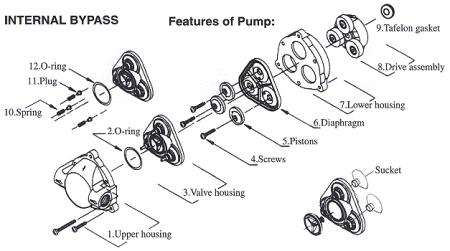
- Pump head - The main part containing the diaphragm, valves and ports. It is usually made of durable plastics like PVC, PP or PVDF. It houses the diaphragm and fluid flow components.
- Diaphragm - The flexible membrane separating the fluid and air chambers. It has preload and reciprocates to discharge fluid. Diaphragms are usually made of elastomers like Santoprene to prolong life.
- Valves - Inlet and outlet valves allow fluid to flow in and out of the pump head. They are flap-type check valves made of PTFE, EPDM etc.
- Air chamber - The cavity behind the diaphragm, pressurized and vented alternately to drive diaphragm motion. It contains compressed air.
- Pneumatic drive - Contains actuator, servo valve etc. to control the air chamber pressure and generate reciprocating motion.
- Base plate - A rigid plate to mount components and fix the whole pump assembly.
Learn More:The reason why you need the Ro booster pump
2.Working principle of Water pressure Pump

- Position: Between fluid and air chambers
- Pressurizing stage: Air chamber pressurized to squeeze diaphragm, discharge fluid
- Depressurizing stage: Air chamber vented, diaphragm springs back to suction fluid
- Reciprocating motion: Achieve continuous fluid delivery
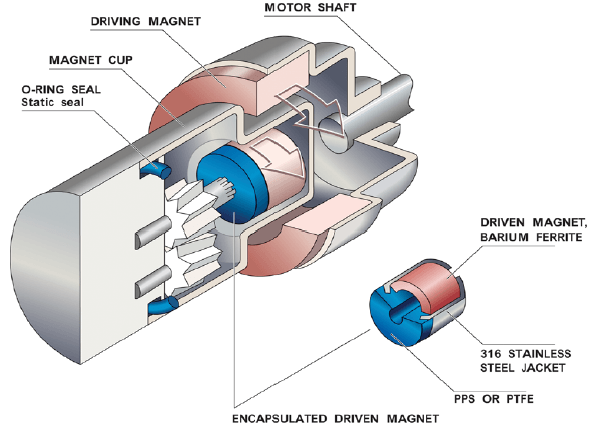
3.Magnetic drive principle
- Drive method: Electromagnet and permanent magnet
- Pressurizing principle: Electromagnet attracts to increase air chamber pressure
- Depressurizing principle: Electromagnet repels to decrease air chamber pressure
- Principle characteristics: Precise control of air chamber pressure to drive diaphragm stable reciprocating motion
Performance Characteristics of RO Diaphragm Booster Pump:
- Large flow output to meet RO system requirement
Water purifier pump adopts large displacement fluid chambers and optimizes the internal flow path to reduce fluid loss. Meanwhile, the magnetic drive mechanism provides strong impetus. These designs aim to enable the RO pump to output larger water flow to meet the high flow demand of RO systems.
- Stable pressure output, suitable for RO membrane
RO membrane needs stable inlet pressure for normal operation. RO diaphragm booster pump uses advanced magnetic drive system to precisely control the air chamber pressure, thereby providing extremely stable output pressure. This pressure stability makes it very suitable to power RO membranes.
- Low noise design, high user comfort
Water pressure pump adopts contactless magnetic drive to avoid mechanical motion noise. Meanwhile, the internally optimized fluid dynamics also greatly reduces fluid noise. Therefore, the RO pump can provide very quiet and comfortable user experience.
- Compact design, easy for installation
All components of RO diaphragm booster pump are highly integrated with small size design. This is because it needs to be installed in tight RO systems, and small size facilitates convenient installation and layout without occupying too much space.
- High efficiency conversion, energy saving
RO diaphragm booster pump uses magnetic drive to avoid mechanical transmission loss, and optimized design to reduce fluid resistance loss. These efforts are to maximize energy conversion efficiency and reduce the overall energy consumption of RO systems.
- Long life, high reliability
RO diaphragm booster pump selects high-quality materials and diaphragms, and goes through strict verification tests, in order to ensure its service life and reliability can fully meet the long-term stable operation requirements of commercial RO systems.
Of course
RO Diaphragm Booster Pump also has some disadvantages:
- Limited flow range
The flow rate of RO diaphragm booster pump is usually between several dozen to hundreds of gallons per day. Large industrial RO systems may require higher flow output.
- Narrow pressure adjustment range
The pressure of RO diaphragm booster pump is generally between 40-80 PSI. For some RO systems that require higher pressure, the pressure range is relatively narrow.
- Still large compared to large-scale RO systems
Although the volume is small, compared to large industrial RO devices, there is still a difference in magnification.

The use and maintenance of RO membrane booster pump
1. Correct selection of installation position
(1) Why correctly select the installation position?
The installation position affects the service life and output performance of the booster pump.
(2) How to correctly select the installation position?
It should be installed in a dry and ventilated location for heat dissipation; close to the water source to shorten the pipeline; securely fixed to reduce vibration.
2. Regular replacement of filter to ensure water quality
(1) Why replace the filter regularly?
Filtration ensures inlet water quality, prevents impurities from wearing pump components, and guarantees normal operation.
(2) How to replace?
The standard replacement cycle for pump for water purifier is every 3000 hours or 6 months. The steps are: close the water source valve, dismantle the filter assembly, rinse or replace the filter with clean water, reinstall the filter, and open the water source valve.
3. Inspect the sealing of piping connections
(1) Why inspect the sealing of piping?
Pipeline leaks can cause output pressure drop and affect boosting effect.
(2) How to inspect?
Observe whether there are water drops, stains and other traces of leakage at the joint positions. Conduct a leak test - when the system is running normally, apply soapy water at each joint position and observe if bubbles are generated. Check the O-ring seals at the joints for aging and damage.
4. Regular maintenance of diaphragm and seals
(1) Why maintain the diaphragm and seals regularly?
They are wear parts, and performance degradation will reduce pump efficiency.
(2) How to maintain?
The standard maintenance cycle for diaphragm pump is 3000 hours or 6 months. Remove the diaphragm assembly, check the diaphragm surface for damage or deformation, check the O-ring seals for gaps or cracks, and ensure no damage before reinstalling.