This is the reason why you need to use an RO booster pump.
What is Ro Booster Pump
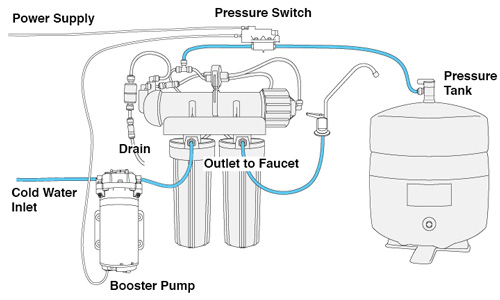
- The Ro booster pump is a type of pump used in reverse osmosis systems, and its basic principle is to increase the water pressure to assist water in passing through the semi-permeable membrane.
:max_bytes(150000):strip_icc():format(webp)/best-reverse-osmosis-systems-4586893-jay-wilde-b88c627b82da4a93827ca422b1ad9b8e.jpg)
The importance of the Ro booster pump and its role in reverse osmosis systems
- reverse osmosis (RO) pump plays a crucial role in reverse osmosis systems. Let me explain its importance and its role in a reverse osmosis system in a simple and understandable way.
- Reverse osmosis is a water treatment technology used to convert wastewater or saline water into clean fresh water. In the process of reverse osmosis, water needs to pass through a semi-permeable membrane to separate salts and impurities. However, the natural osmotic pressure of water is not sufficient to overcome the resistance of the membrane. Therefore, we need an Rv booster pump to help water pass through the membrane.
- The role of an RO booster pump is similar to a "booster" or an "assistance". It increases the pressure of water, enabling it to overcome the resistance of the membrane and pass through successfully. It's like providing water with a powerful force to help it overcome the difficulties and successfully pass through the membrane.
- Without an water pressure pump, a reverse osmosis system would not work properly. Due to insufficient pressure, water would be unable to pass through the semi-permeable membrane, resulting in the failure to achieve purified water. Therefore, an water pressure pump is an indispensable component of a reverse osmosis system.
- The importance of an RO booster pump also lies in its ability to enhance the efficiency and performance of the reverse osmosis system. By increasing the pressure of water, the RO booster pump can reduce water flow, making the reverse osmosis process more efficient. This not only saves energy and costs but also prolongs the lifespan of the reverse osmosis system.
The functions and advantages of the Ro booster pump.
The importance and practical applications of water booster pumps in the water treatment industry:
Ro booster pumps play a significant role in the water treatment industry and are widely applied in various fields. For example, they are commonly used in home reverse osmosis water filters to ensure clean and safe drinking water for households. Additionally, water pressure booster pump are extensively used in commercial and industrial sectors, such as hotels, food processing plants, pharmaceutical factories, etc.,
to provide high-quality water sources. It is worth noting that the selection of Ro booster pumps can be based on different water flow requirements, with various types available to meet specific needs.
Key technical features:
rv water pumps incorporate advanced working principles, high efficiency, and reliability. They typically utilize efficient motors and high-quality materials.
The core component, the motor, can be classified into two types:
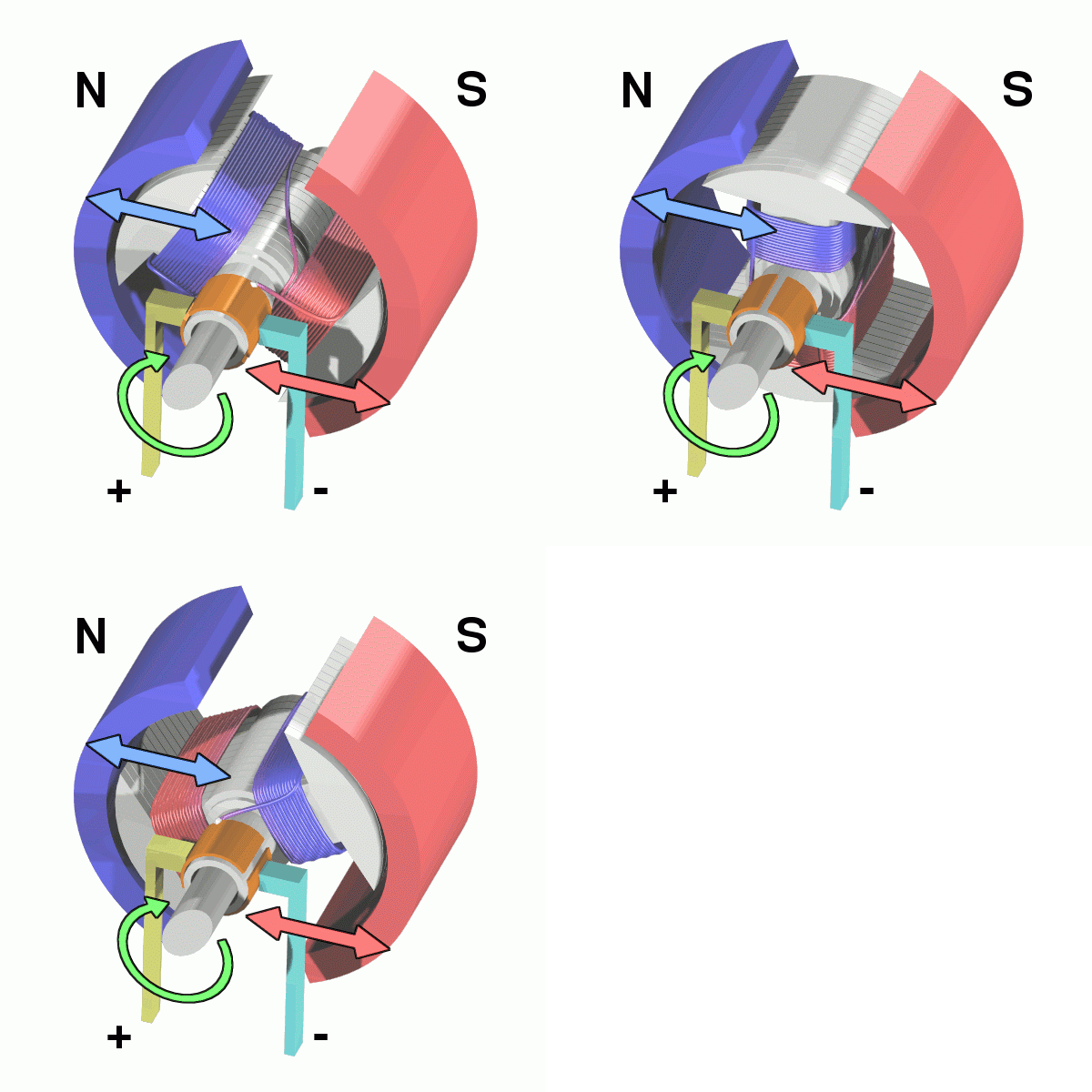
Brushed motor: Characterized by relatively fixed water output, providing a constant and regulated supply.
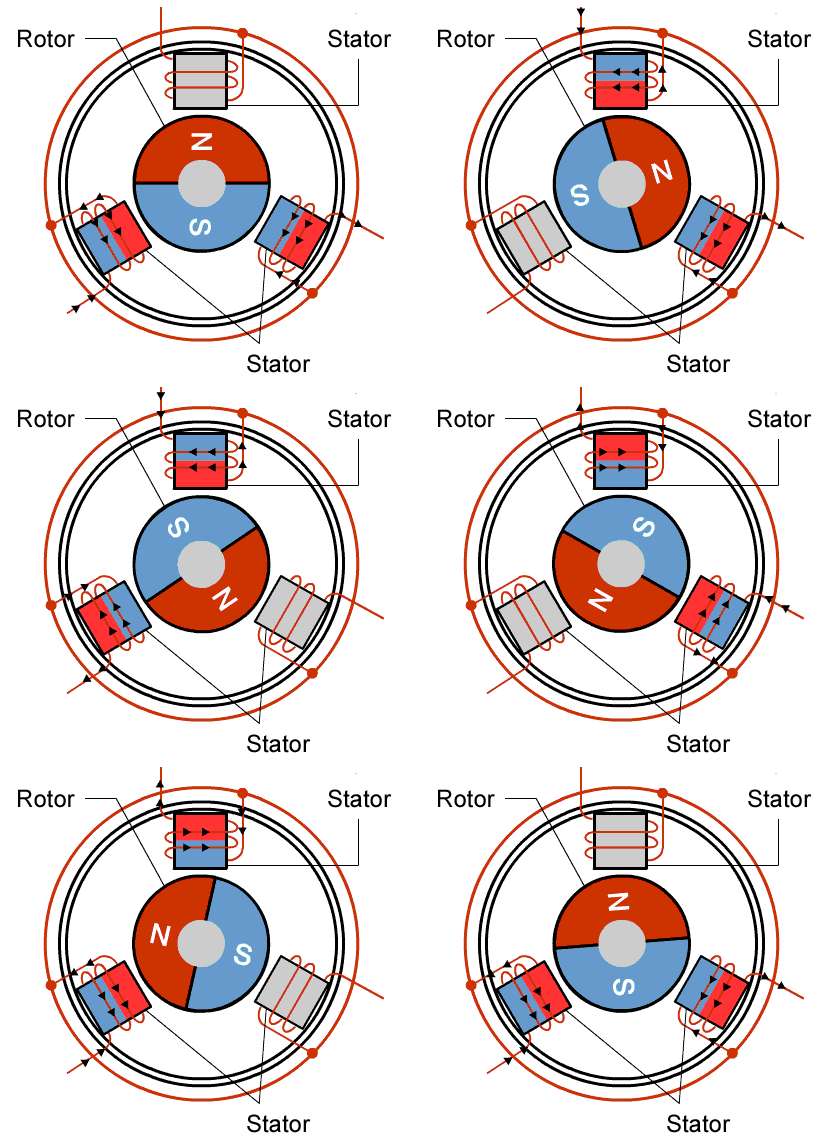
Brushless motor: Characterized by adjustable water output according to actual requirements, allowing precise control.
Motors can be powered by different methods:
Direct current (DC) power supply: Voltage primarily ranges from 12-36V.
Alternating current (AC) power supply: Voltage primarily ranges from 115-230V.
The choice can be made based on specific requirements.
Performance parameters:
Performance parameters of ro pump include maximum water flow rate, pressure, and energy efficiency.
Most Ro booster pumps are categorized based on water flow output, power supply mode, and motor model.
Water flow rates can range from 650mL/min to 10,000mL/min.
Key factors and considerations in selecting Ro booster pumps:
Key factors:
When selecting water pressure pumps, different models can be chosen based on their functionalities. Common options in the market include regular Ro pumps, Ro pressure-regulating pumps with stable water output pressure, and Ro cut-off pumps with automatic water interruption function, replacing the inlet solenoid valve of the Ro water purifier system, among others.
Considerations:
- Pay attention to whether the power adapter used is compatible with the electrical parameters of the Ro system.
- Suitable for water temperatures ranging from 5°C to 45°C.
- Not suitable for operation in media containing grease, chemical liquids, or corrosive gases.
- For Ro pumps without pressure stabilization function, if the inlet water pressure in the installation environment exceeds 40psi, the pump's operating pressure parameters will exceed the typical working pressure range of Ro membranes.
Installation requirements and steps of Ro booster pumps:
The installation of pressure booster pump must adhere to specific requirements and steps to ensure proper operation. For example, attention should be given to the connection of the pump's inlet and outlet ports with the water pipes, ensuring a tight seal to prevent leaks.
The installation steps of Ro booster pumps are as follows:
- Prepare the installation location: Select a suitable location near the reverse osmosis system that allows for easy maintenance. Ensure sufficient space to accommodate the pump and provide proper ventilation.
- Shut off power and water supply: Before commencing the installation, turn off the power supply to the reverse osmosis system and close the water supply valve to prevent any unexpected accidents or water leakage during the installation process.
- Determine the correct orientation: Check the directional arrows on the pump body to ensure the proper flow direction. Install the pump with the inlet and outlet ports aligned accordingly.
- Connect the water pipes: Install appropriate fittings and connectors to connect the incoming water line to the pump's inlet port and the outgoing line to the outlet port. Use Teflon tape or thread sealant to ensure a tight seal and prevent water leakage.
- Mount the pump: Securely mount the pump on a stable surface using screws or brackets. Ensure the pump is level and firmly fixed to avoid vibration or movement during operation.
- Electrical connections: Connect the pump's power cord to a dedicated power outlet. Follow the manufacturer's instructions and local electrical codes for proper wiring and grounding.
- Test the system: After completing the installation, slowly open the water supply valve and check for any leaks. Turn on the power to the reverse osmosis system and observe the pump's operation. Verify proper water flow and pressure.
- Regular maintenance: Regular maintenance is crucial for the long-term stable operation of Ro booster pumps. This includes periodic checks for leaks, cleaning or replacement of filters, and ensuring all components function properly.
Please remember that it is recommended to always follow the instructions and guidelines provided by the manufacturer specific to the water booster pump model for accurate installation steps.
Maintenance and care recommendations:
To ensure the long-term stable operation of water pressure booster pumps, regular maintenance and care are necessary. It is advised to regularly check the pump's operation status, clean filters, and periodically replace seals, among other maintenance tasks.
In summary, Ro booster pumps significantly improve the performance of reverse osmosis systems by increasing water pressure and flow. Their importance in the water treatment industry cannot be underestimated, with multiple practical applications. Understanding the key features and technical details of Ro booster pumps, as well as proper selection, installation, and maintenance methods, enables us to fully utilize their functionality and advantages.